
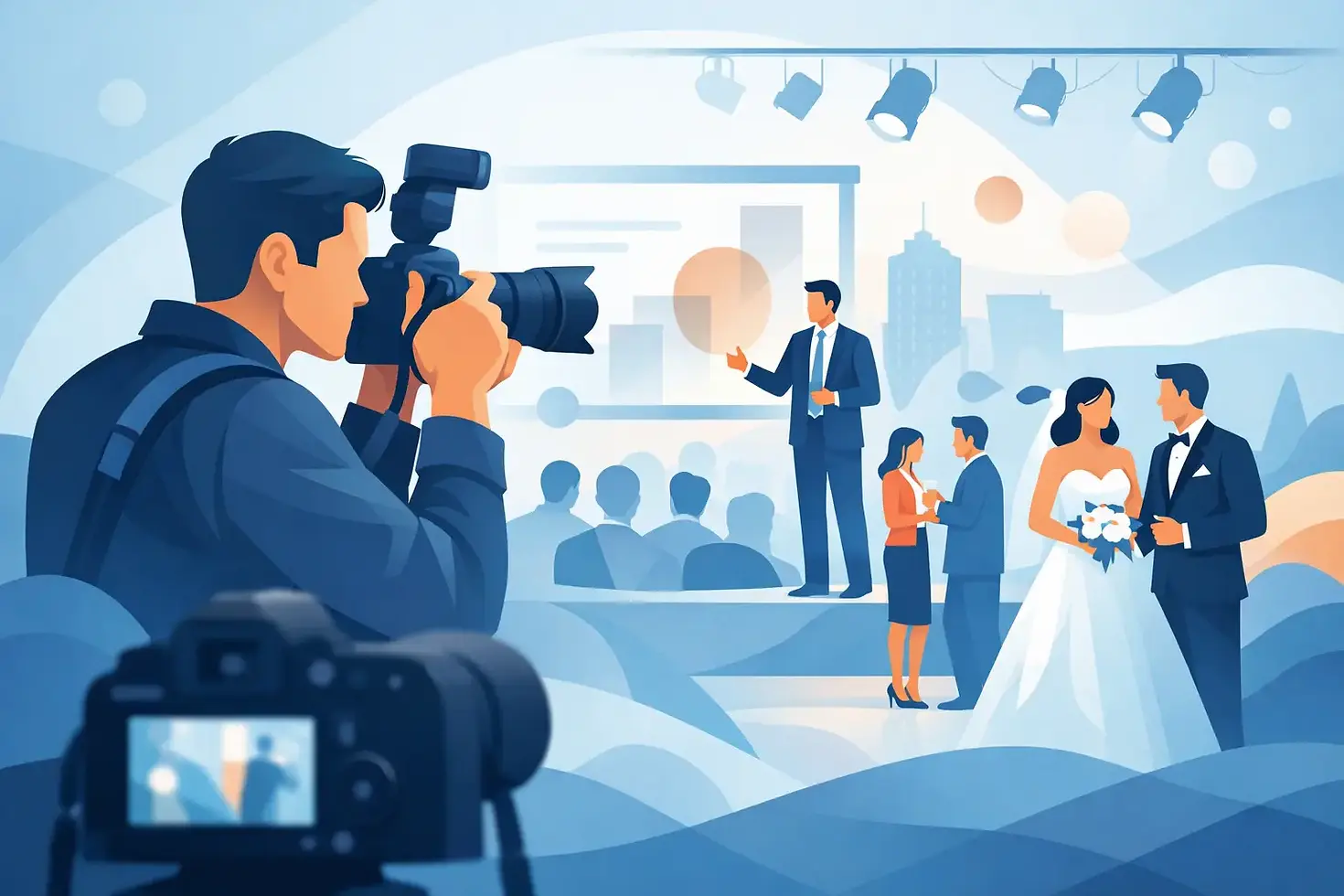
Why Professional Event Photography Matters
A full room, a well-built stage, strong speakers, branded signage, and months of planning can all lose value fast if the visuals fall short. Professional event photography is not just about documenting who attended and what happened. For businesses and organizations, it is a practical investment in brand perception, post-event marketing, internal communications, and long-term content value.
When an event is over, the photos often become the lasting public record. They are what your team shares with stakeholders, what marketing uses in future campaigns, what sponsors review, and what potential attendees see when deciding whether your next event is worth their time. That makes the quality of event photography a business decision, not a minor production detail.
What professional event photography actually delivers
The difference between casual coverage and professional event photography is not simply better equipment. It is planning, judgment, consistency, and an understanding of how images will be used after the event.
A professional photographer works with intention. They anticipate key moments instead of reacting late. They understand lighting in ballrooms, conference halls, trade show floors, and outdoor venues where conditions shift quickly. They know how to photograph speakers without awkward expressions, capture audience engagement without making the room look sparse, and frame branded details in ways that feel natural rather than forced.
Just as important, they think beyond the event itself. A strong image set should support multiple business goals. One gallery may need to serve social media, website updates, sponsor recaps, recruitment efforts, internal newsletters, press outreach, and future event promotion. That takes more than basic coverage. It takes a strategy.
Why professional event photography matters for brands
For many organizations, events are one of the few times their brand comes to life in a visible, high-energy setting. Leadership appears in person. Teams interact with clients. Customers engage directly with products or services. If those moments are captured well, the resulting visuals can strengthen credibility long after the event ends.
This matters especially for corporate events, conferences, nonprofit gatherings, launches, galas, and community activations. These are not private moments with limited value. They are brand moments. The photography needs to reflect that.
Strong event images help businesses look organized, relevant, and established. They show attendance, participation, professionalism, and momentum. They can also communicate culture. Photos of leadership engaging with attendees, employees collaborating on site, or guests interacting naturally often say more about an organization than a written recap ever will.
There is also a trust factor. Prospective clients, partners, donors, and sponsors pay attention to visual quality. If event photography looks inconsistent, poorly lit, or incomplete, it can quietly weaken the perception of the event and the organization behind it. The opposite is also true. Clean, polished imagery reinforces competence.
The business value goes beyond event day
One of the most common mistakes businesses make is treating photography as a same-day need instead of a post-event asset library. In practice, the most valuable event photos often get used weeks or months later.
A single event can produce content for recap posts, sales decks, annual reports, email marketing, recruiting materials, media kits, and future event promotion. For companies that regularly host or attend events, this content becomes part of a larger visual system. It supports brand consistency and reduces the scramble to find quality images when a deadline appears.
That said, not every event requires the same level of coverage. A leadership summit may call for a more polished editorial style with a focus on speakers, networking, and branded environments. A community activation may need more audience interaction and wider storytelling. A trade show may prioritize booth traffic, partner engagement, and product visibility. Good event coverage is never one-size-fits-all because the business use is different every time.
What to look for in a professional event photographer
Businesses usually notice photography quality first, but reliability matters just as much. Event coverage leaves little room for missed moments, slow communication, or uncertainty around deliverables.
A strong event photographer should understand run-of-show planning, shot priorities, brand standards, and how to work efficiently in fast-moving environments. They should be able to align with stakeholders before the event, identify must-capture moments, and adapt when schedules shift. That flexibility is critical because events rarely unfold exactly as planned.
It also helps to work with a team that understands the broader media role of the assignment. If photos need to match existing brand visuals, support a marketing campaign, or work alongside video coverage and live streaming, coordination becomes part of the value. That is where a multimedia partner often brings more consistency than a standalone vendor.
For Detroit businesses and organizations hosting conferences, corporate programs, launches, or branded experiences, this level of preparation can make the difference between a gallery that simply records the day and one that actively supports business goals.
Planning for better professional event photography
The quality of the final images is shaped well before the first guest arrives. Clear planning improves coverage, reduces missed opportunities, and makes the photography more useful afterward.
Start with the intended outcomes. If the priority is sponsor visibility, those placements should be identified in advance. If leadership presence matters, the photographer should know who needs to be documented and in what context. If marketing needs social-ready images quickly, turnaround expectations should be discussed before the event begins.
It also helps to think in layers. Wide shots establish scale. Mid-range images show activity. Close details capture branding, products, table settings, signage, and human interaction. The best event galleries balance all three. Too many close-ups can make a major event feel small. Too many wide shots can make the experience feel impersonal.
Timing is another factor that clients often underestimate. Lighting changes, room energy shifts, and key moments can cluster close together. If there are multiple stages, breakout sessions, or simultaneous activations, one photographer may not be enough. This is not about overselling coverage. It is about matching production support to the actual event footprint.
Common gaps that weaken event coverage
Most disappointing event galleries fail for predictable reasons. Sometimes there was no clear shot list. Sometimes the photographer had little understanding of the brand. Sometimes there was too much focus on random candids and not enough on meaningful business moments.
Another common issue is incomplete storytelling. You may have ten photos of a keynote speaker but none that show the audience response, room setup, sponsor branding, or executive interaction afterward. Those missing images limit how the event can be presented later.
Editing also matters. Businesses need polished, consistent delivery. That means balanced color, clean composition, and an image set that feels cohesive rather than uneven. Overprocessed edits can be just as damaging as weak photography because they make professional events look artificial.
Professional event photography as part of a larger brand strategy
The most effective organizations do not treat event visuals as isolated content. They use them as part of an ongoing brand communication strategy.
When event photography aligns with your website, social channels, campaign materials, and corporate identity, it creates continuity. Prospects see a brand that presents itself with clarity. Internal teams have stronger assets to work with. Event investments continue delivering value after the room is empty.
This is why a tailored approach matters. Businesses need coverage that reflects their audience, message, and standards. A nonprofit fundraising gala should not be photographed the same way as a manufacturing conference or a luxury brand launch. The setting, pacing, and purpose all shape what strong coverage looks like.
At Germain Gavonni Media, that client-specific approach is central to how business events are documented. The goal is not only to capture polished images, but to create visuals that strengthen how an organization is seen by the people who matter most.
Choosing professional event photography means choosing to protect the value of the event you worked hard to create. When the photos are thoughtful, polished, and aligned with your brand, they keep working long after the doors close. That is where the real return begins.


Comments