
What Is Event Photography for Business?
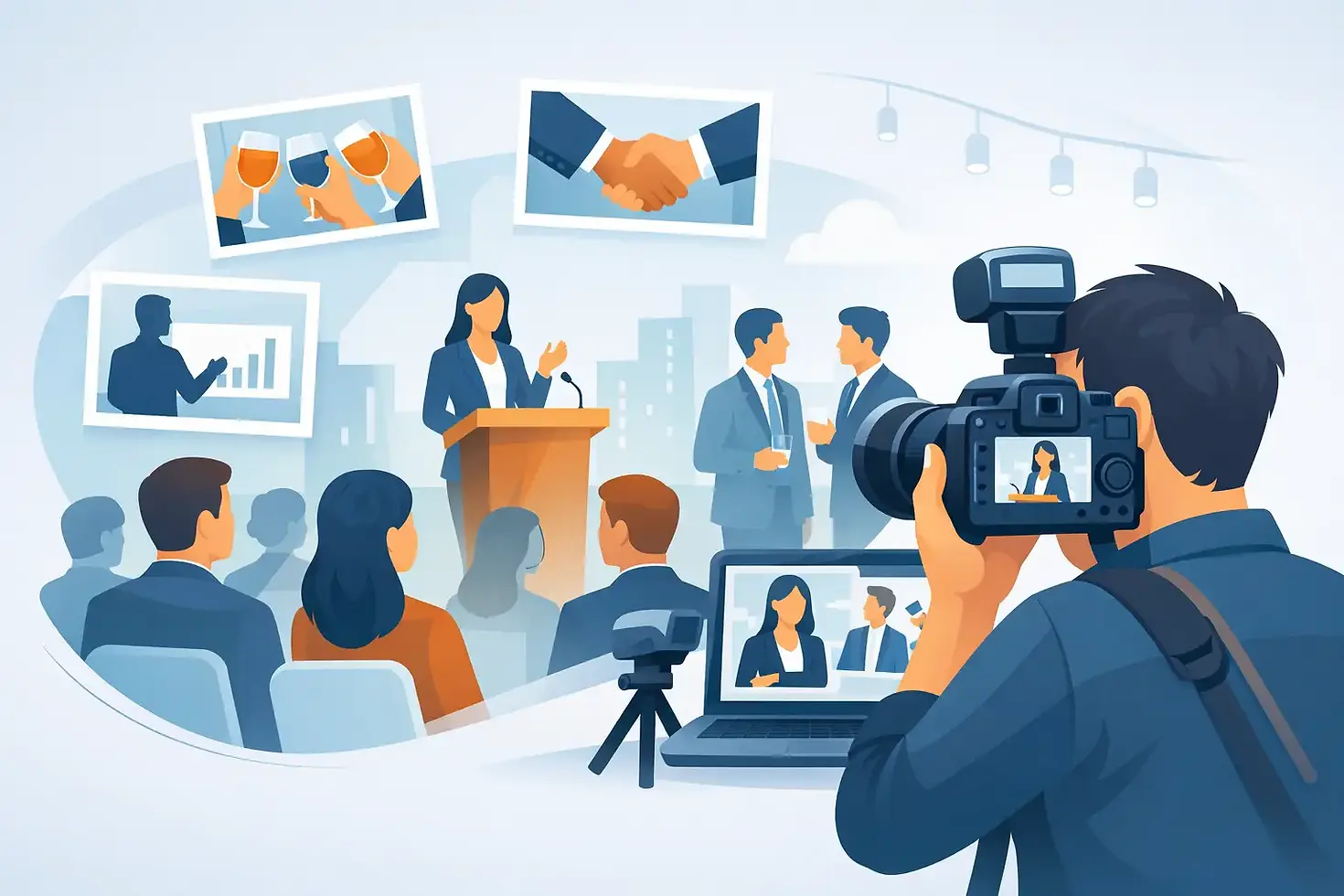
A keynote lands, the room reacts, your team is networking, sponsors are visible, and your brand is showing up exactly as intended - but only if someone captures it well. That is where understanding what is event photography matters for businesses. It is not simply taking pictures at a gathering. It is the professional documentation of an event in a way that preserves important moments, reflects brand standards, and creates visual assets that can be used long after the event ends.
What Is Event Photography?
At a business level, event photography is the process of photographing live experiences such as conferences, corporate meetings, trade shows, fundraisers, launches, networking events, galas, and internal company functions. The goal is not just to record who was there. The goal is to tell the story of the event with clarity, polish, and purpose.
That purpose matters. A business event is often part marketing, part relationship building, and part brand presentation. Strong event photography captures the energy of the room, the professionalism of the setup, the visibility of sponsors, the interactions between guests, and the details that show your organization is credible and well organized.
In other words, event photography sits at the intersection of documentation and brand communication. It creates proof that your event happened, but it also creates content you can use in marketing campaigns, internal updates, recruiting materials, social media, press outreach, annual reports, and future event promotion.
What Event Photography Includes
The scope of event photography depends on the type of event and what the client needs to achieve. For one company, the priority may be executive speaking moments and audience engagement. For another, it may be sponsor recognition, product displays, candid networking, and branded environmental shots.
Most professional event coverage includes a mix of wide room images, medium interaction shots, and close-up detail photography. That balance matters because a gallery made up only of posed photos often feels flat, while a gallery made up only of candid images may miss key brand elements. Effective coverage brings both together.
Common business event moments photographers capture
For corporate and organizational clients, event photography often covers speaker presentations, panel discussions, guest arrivals, check-in areas, venue branding, signage, décor, sponsor placements, award presentations, audience reactions, networking conversations, staff coordination, and team portraits on-site. If the event includes VIP guests, media appearances, product demonstrations, or live entertainment, those elements may also be part of the coverage plan.
This is why pre-event planning is so important. A professional photographer should understand what matters most before the first guest arrives.
Why Businesses Invest in Professional Event Photography
Many organizations assume event photos are mainly for social posting. They are useful there, but their value is much broader than that. A well-executed event gallery becomes a business asset library.
Photos from a single event can support your website, sales materials, recruiting efforts, investor communications, recap decks, and future promotions. They can also help reinforce consistency across your brand. If your company wants to be seen as polished, active, credible, and people-focused, event imagery plays a direct role in that perception.
There is also a trust factor. When prospective clients, partners, donors, or employees see strong visuals from your events, they are not only seeing a room full of people. They are seeing how your organization presents itself. They are seeing scale, professionalism, participation, and momentum.
That said, not every event needs the same level of coverage. A small internal workshop may call for light documentation. A major conference or public-facing launch usually requires a more strategic approach with a shot list, timeline coordination, and clear priorities for post-event use.
What Makes Event Photography Different From Other Photography
Event photography is its own discipline because the pace is different and the conditions are often unpredictable. Unlike studio photography, there is usually no chance to reset the scene, control every light source, or ask a speaker to repeat a moment. The photographer has to work in real time, anticipate key interactions, and stay aligned with the event schedule.
That requires technical skill, but it also requires awareness and judgment. A strong event photographer knows when to move quietly, when to stay unobtrusive, when to capture candid moments, and when a brief bit of direction is appropriate. For business events especially, professionalism on-site matters almost as much as the final images.
What a professional event photographer is really doing
They are monitoring lighting changes, adjusting settings quickly, tracking the run of show, watching for brand elements in the frame, avoiding unflattering angles, capturing authentic expressions, and making sure important stakeholders are documented. They are also working ahead mentally - anticipating applause, award handoffs, panel exchanges, and networking moments before they happen.
This is one reason phone photos and casual coverage often fall short for business use. They may capture a moment, but they rarely capture it with the consistency, composition, and brand awareness needed for professional marketing.
What Is Event Photography Used For After the Event?
One of the most practical ways to define what is event photography is this: it creates content that continues working after the room is empty.
For businesses and organizations, post-event photography can be repurposed across multiple channels. Marketing teams use it for event recap pages, email campaigns, social content, promotional graphics, and sales presentations. Communications teams use it for press releases, newsletters, internal announcements, and executive messaging. HR and recruiting teams may use it to show company culture, team engagement, and leadership visibility.
This is why strategic coverage matters. If the photography only captures random snapshots, the long-term value is limited. If it captures branded visuals, audience participation, team presence, and meaningful interactions, it becomes much more useful across departments.
How to Know If You Need Event Photography
If your event matters to your brand, your people, or your public presence, professional coverage is usually worth considering. That does not mean every gathering needs extensive production. It means you should weigh the event's purpose against the value of having polished visual documentation.
For example, if you are hosting clients, announcing something new, featuring leadership, honoring sponsors, or investing significantly in event design, strong photography helps protect that investment. If your event is internal but tied to culture, recruitment, or company milestones, the images may still have meaningful business value.
The better question is often not whether you need photos. It is what the photos need to do for you afterward.
What to Look for in an Event Photographer
Businesses should look beyond a nice portfolio. Style matters, but reliability, communication, and business awareness matter just as much.
A strong event photographer should understand timelines, brand priorities, stakeholder visibility, and the difference between artistic preference and client need. They should be able to work comfortably in active environments, collaborate with planners and internal teams, and deliver images that feel polished without feeling staged.
It also helps to work with a creative partner who understands broader content goals. If you need imagery that supports future marketing, not just a photo archive, that should shape the way the event is covered from the start. For companies that want a dependable, business-focused approach, that difference is significant.
The Business Value of Getting It Right
Good event photography does more than show what happened. It helps shape how people remember the event and how they perceive your organization afterward. That is especially important when your brand relies on credibility, engagement, and a strong public image.
When coverage is done well, the result is a set of images that feels intentional. The event looks organized. The audience looks engaged. The speakers look confident. The brand looks established. Those details influence perception, even when viewers do not consciously analyze them.
For organizations that host recurring events, the value compounds over time. Each event builds a stronger visual record of activity, leadership, community, and brand presence. That kind of consistency supports long-term marketing and reputation in a way ad hoc photos rarely can.
At Germain Gavonni Media, that is how event photography is approached - not as a simple checklist of pictures, but as a strategic visual service that helps businesses present themselves with precision and confidence. When your event represents your brand, the photography should do the same.
The strongest event images are rarely accidental. They come from clear planning, experienced execution, and a real understanding of what the event needs to communicate after the last guest leaves.


Comments