

Event Photographer vs Videographer: What Fits?
- Willis Greenwood
- Aug 2
- 6 min read
A full ballroom, a keynote worth sharing, a sponsor activation drawing a crowd - these moments move quickly, and they serve different business purposes once the event ends. The event photographer vs videographer decision is not simply a question of preference. It determines what your team can publish, how attendees remember the experience, and how much usable content you have for future marketing.
For corporate teams, event planners, and organizations, the strongest choice begins with a clear answer to one question: what should this event continue to do for your brand after the room is cleared?
Event Photographer vs Videographer: The Core Difference
Photography preserves decisive moments in a single, polished frame. It is especially effective for documenting speakers, attendee engagement, branded environments, award presentations, executive interactions, and sponsor visibility. A strong event image communicates quickly. It can be reviewed in seconds, shared across channels, and incorporated into a recap, newsletter, press release, sales deck, or internal update without asking the viewer for much time.
Videography captures movement, sound, and sequence. It is the better medium when the delivery of a message matters as much as the moment itself. A founder's opening remarks, a customer testimonial, the pace of a live demonstration, or the energy of a packed conference floor often gains meaning through voice, expression, applause, and motion.
Neither format is inherently more valuable. The right investment depends on how your audience consumes content and which parts of the event carry the most strategic value.
When Event Photography Is the Better Fit
Photography is often the most practical choice when you need broad coverage and fast, versatile assets. A well-planned photo gallery can document an entire program while supplying your marketing team with a large library of images for months ahead.
For example, a company hosting a client appreciation reception may need polished images of arrivals, candid networking, venue details, branded signage, leadership, and group photos. These visuals support social posts, website updates, recruiting materials, sponsor reporting, and next year's event promotion. They also provide immediate proof of attendance and participation for stakeholders who were not in the room.
Photography is particularly useful when the event includes many brief but important interactions. A photographer can move efficiently between rooms, capture multiple perspectives, and cover moments that happen simultaneously. That range matters at conferences, galas, trade shows, community programs, and multi-session corporate events.
It can also be the more efficient option for teams working with a defined budget. Photography generally requires less post-production time than a produced event film, although editing standards, delivery timelines, and the size of the event still affect the scope. The result is a substantial collection of ready-to-use visual assets with relatively simple distribution.
Photography works best when you need
Photography is a strong fit when your priority is a high volume of branded assets, rapid post-event sharing, executive and attendee visibility, or visual documentation for sponsors and internal teams. It is also a practical choice when your event's key moments are primarily visual rather than spoken.
That does not mean event photography should be treated as basic documentation. The strongest coverage is guided by a shot plan that reflects your brand priorities. If sponsor recognition matters, the creative team should know it. If your leadership team needs updated imagery, that should be planned before the first guest arrives.
When Event Videography Delivers More Value
Video is the better fit when your event has a story that needs to be heard and felt. It can turn a one-day program into a lasting marketing asset by combining visuals with remarks, music, interviews, and the atmosphere of the experience.
Consider a product launch. Still images can show the product, the audience, and the stage. A video can show the reveal, capture the response, and explain why the product matters in the words of the people behind it. That distinction is meaningful when your goal is to create anticipation, educate buyers, or give an audience a reason to care.
Event video is also valuable for organizations with a distributed workforce or audience. Employees, clients, partners, and prospects who could not attend can still experience key messages through a recap film, edited session footage, interview clips, or short social content. For internal communications, this can extend the reach of leadership announcements far beyond the event itself.
The trade-off is that video requires more planning. Audio quality, lighting, camera placement, interview scheduling, speaker permissions, and editing expectations all shape the final result. A videographer needs to anticipate not only what will look good, but what will sound clear and tell a cohesive story.
Video works best when you need
Videography is often the right choice for keynote-driven events, product announcements, testimonials, live demonstrations, culture-focused gatherings, and experiences with strong audience energy. It is especially effective when the final content will be used in campaigns, recruiting, sales enablement, social media, or internal communications.
A short highlight video can create excitement, but it should not be the only plan if your event includes valuable educational content. In that case, consider whether full-session recording, speaker clips, or attendee interviews will better serve your goals. The deliverables should be defined before production begins, not after the event is over.
How to Choose Based on Your Business Goal
Start with the intended use of the content. If your team needs images for a website refresh, event recap, social posts, sponsor acknowledgments, and future promotional materials, photography may provide the greatest immediate return. If you want to communicate a message, capture testimonials, or build a campaign around the event, video may be the stronger investment.
Next, consider the audience. A busy executive may engage with a compelling event photo on LinkedIn faster than a two-minute recap. A prospective employee may connect more deeply with a video that shows your company culture and lets current team members speak. The format should match the attention, context, and expectations of the people you want to reach.
Then look at the event environment. Dark ballrooms, fast-moving crowds, large stages, and multiple breakout sessions create different production needs. A professional team can plan around these conditions, but the scope must account for them. If the keynote and a sponsor activation happen at the same time, one person cannot fully cover both without a clear priority or additional crew.
Finally, be realistic about the life span of the content. A photo gallery can supply assets for ongoing use, while an event video can become a central campaign piece. Both can offer long-term value, but only if they are edited, organized, and delivered in formats your team can actually use.
Why Many Events Need Both
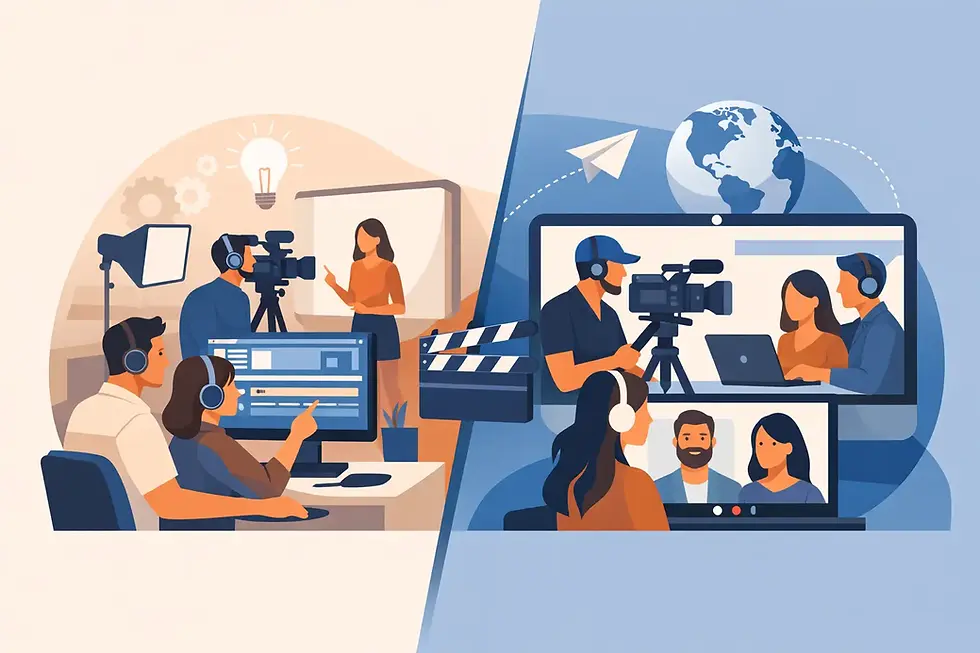
For high-visibility events, photography and videography often work best together. Photography provides the breadth: the room, the people, the details, and the moments that can be immediately shared. Video provides depth: the voice of the speaker, the reaction of the audience, and the narrative that turns an event into a story.
This combination is especially useful for annual conferences, major fundraisers, corporate celebrations, trade show activations, and brand launches. It gives marketing teams a complete content library rather than forcing them to choose between static documentation and motion-based storytelling.
The key is coordination. A photographer and videographer should work from the same understanding of the event schedule, brand guidelines, must-capture moments, and final deliverables. Without that alignment, coverage can feel fragmented or important moments can be missed while each person assumes the other has it handled.
Plan Coverage Before You Book
The most effective event coverage starts well before the event day. Share the agenda, venue details, brand standards, speaker list, VIP names, sponsor commitments, and the specific outcomes your organization needs. If there are moments that cannot be repeated, such as an award handoff or product reveal, identify them clearly.
It also helps to think beyond the event recap. Ask what content would still be useful 90 days later. That question often reveals the need for executive portraits, attendee testimonials, vertical video clips, detail photos, or full recordings of a session that your sales or training team can reuse.
A dependable creative partner will help turn those needs into a realistic coverage plan, accounting for timing, crew size, lighting, audio, and delivery priorities. For Detroit organizations planning a conference, gala, launch, or corporate gathering, that preparation protects both the event experience and the value of the final media.
Choose photography when you need flexible visual proof of your event. Choose video when you need people to hear, feel, and remember its message. When the event is central to your brand's visibility, plan for the assets you will need next - not only the moments you want captured today.


Comments